Press Enter
A case study in the compilation of aesthetic models by a neighborhood coffee establishment
Following Iverson's dictum to build a model before pressing enter, we prepared an aesthetic model — Beauty, unqualified — and executed it in a public coffee shop. Multiple baristas returned convergent positive results without prior consultation. We conclude that the coffee shop functioned as a compiler for the current state of the model.
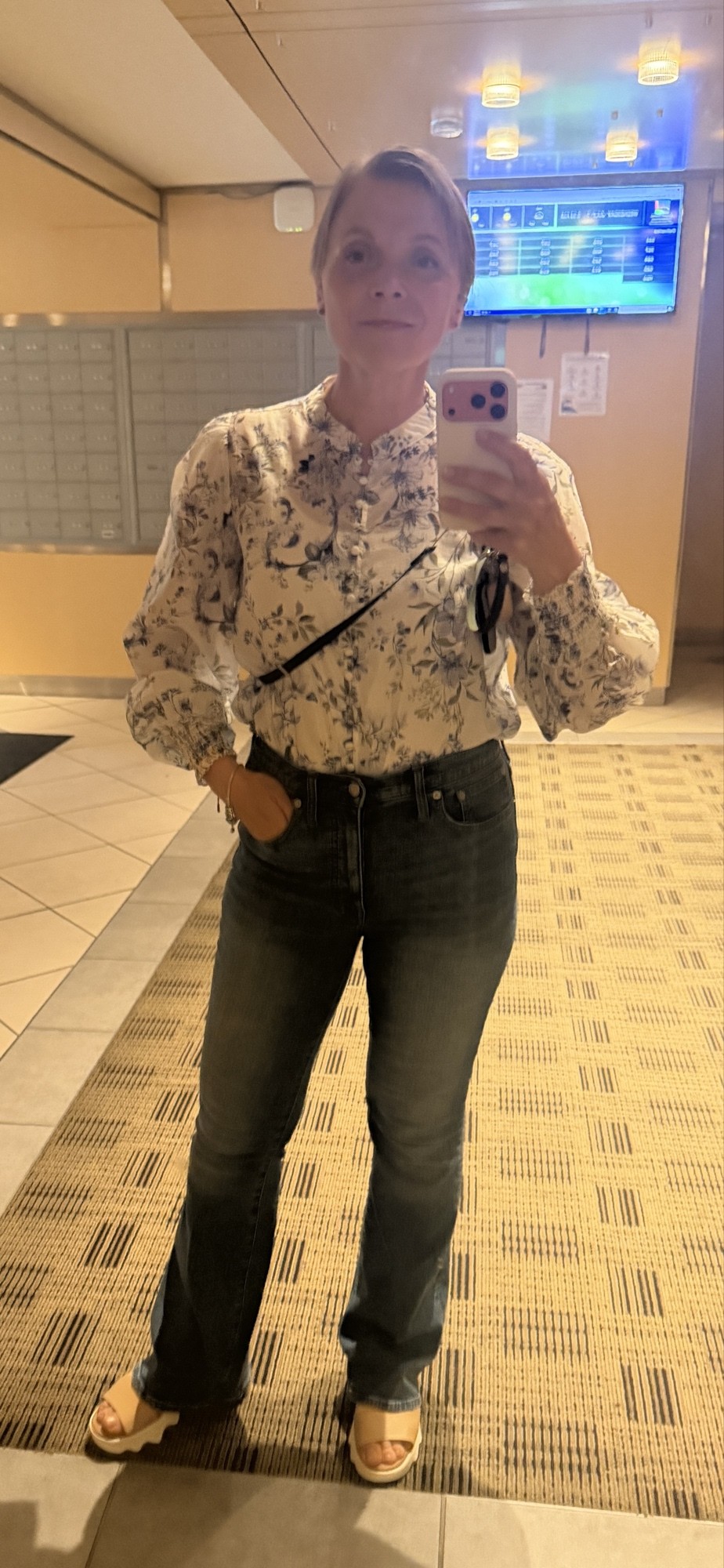
This morning Kenneth Iverson and I walked into a coffee shop together. He didn't know it. He has been dead for years. I had just read the first two pages of his mathematics book.
Before pressing Enter, think about what the result should be.
In other words, don't use the world to think instead of you. Build a model first. Then test it.
The experiment waiting for me had nothing to do with mathematics. It was hanging in my closet. The model was simple. Beauty. Not a particular blouse. Not jeans. Not sandals. Beauty itself. The outfit became the expression of the current model.
Then I walked to my usual coffee shop. I pressed Enter.
The computer happened to consist of several baristas who have known me for years. Without consulting one another, they all started giving me thumbs-up and telling me how beautiful I looked. I laughed.
Kenneth Iverson had suggested testing a mathematical model. I had accidentally tested an aesthetic one. The important part was not whether the prediction came true. The important part was that reality answered.
The coffee shop became a compiler. It returned the current state of my model.
The Department of Magical Causality immediately claimed another victory. It announced that beauty and HRV had been correct all along. The Department has a remarkable publication record despite never producing a controlled study. I have learned not to argue with them. They are very persuasive.
What surprised me most, however, was not the coffee shop. It was recognizing that Iverson and I had been performing the same operation in different domains. He used clocks, toasters, and computers. I used a floral blouse and coffee. Both begin the same way. First, build a model. Then, instead of arguing about it, press Enter.
The world is often kinder than debate. It simply replies.
- [1]Iverson, K. E. (1962). A Programming Language. §1.1–1.2. Wiley.
- [2]Department of Magical Causality. (n.d.). Selected Proceedings, Vols. I–XLII. Unpublished, unreviewed, and undeterred.
Author statement · No baristas were harmed. Two croissants were consumed as controls.
Conflicts of interest · The author declares no competing interests.
Funding · This work received no external funding, only tea.
Cite as · Solstad, K. (2026). Press Enter. Acta Observationum, I(1), pp. 9–11.